What Makes Packed Chole Bhature a Convenient Choice for Home
There is a particular kind of hunger that does not ask for effort. It arrives after long workdays, during quiet weekends, or on evenings when cooking feels like a responsibility rather than comfort. In those moments, the idea of eating something familiar matters more than eating something elaborate. Ready-to-eat chole bhature fits naturally into this space, offering reassurance rather than excitement.
Packed Indian meals were once seen as last-resort options, but that perception has changed over time. Today, convenience is not about cutting corners. It is about making room for everyday life. When done right, ready-to-eat food allows people to eat well without rearranging their schedules. Chole bhature, a dish deeply tied to routine and comfort, translates well into this format when its character is respected.
For many households, having a dependable packed meal on hand is less about speed and more about certainty. Knowing what the food will taste like before the packet is opened is what makes it truly convenient.
How to Store Packed Chole Bhature Correctly at Home
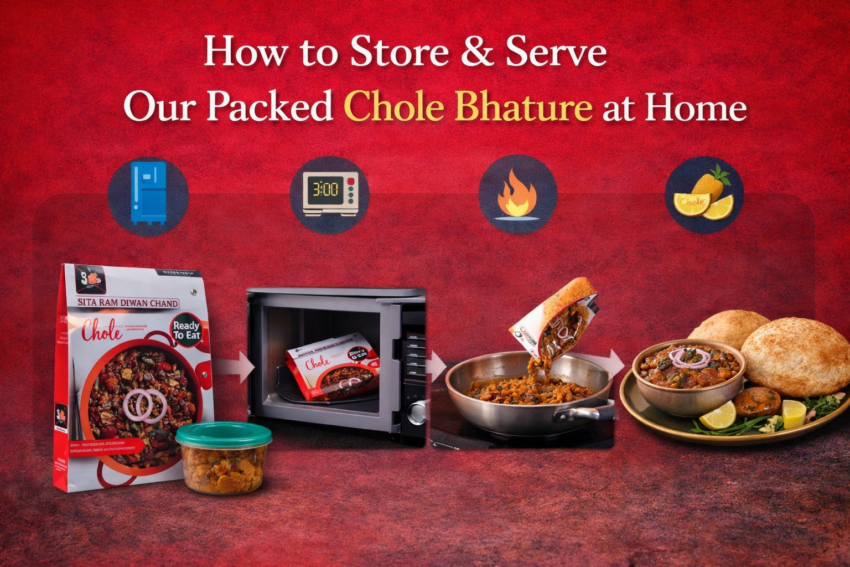
The way packed food is stored often determines whether it feels satisfying or disappointing when finally served. Once brought home, packed chole bhature should be kept away from heat and moisture, preferably in a cupboard where the temperature remains steady. Direct sunlight and humid kitchen corners are small details that make a noticeable difference over time.
It is important to leave the packaging unopened until the moment of use. Once opened, the food should be consumed as intended and not left exposed longer than necessary. Reheating should be done patiently, allowing the chole to warm evenly instead of rushing the process. Gentle heating preserves the balance of spices far better than aggressive temperatures.
Packed food storage tips often focus only on shelf life, but flavour is equally dependent on care. Clean utensils, covered serving, and immediate consumption help maintain the experience the dish was meant to offer.
Common Storage and Serving Mistakes to Avoid
One common mistake with ready-to-eat meals is treating them casually simply because they are packaged. Leaving food at room temperature, reheating more than once, or storing packets near heat sources slowly degrades both taste and texture. These habits may seem harmless, but often explain why food feels flat or overly heavy when served.
Another oversight lies in serving. Chole bhature does not need elaborate additions or excessive accompaniments. Overcomplicating the plate or letting reheated food sit uncovered for too long changes how it is meant to be enjoyed. Simplicity works best here, much like it does at a trusted local eatery.
Avoiding these small but frequent errors ensures that convenience does not come at the cost of comfort.
How Sita Ram Diwan Chand Supports Convenient Home Dining
When a place known for tradition chooses to offer ready-to-eat food, the intention matters. Since its beginnings in 1950, Sita Ram Diwan Chand has built its name on consistency rather than adaptation for the sake of scale. That same restraint shows in how its packaged chole bhature is approached. The goal is not to recreate the in-store experience perfectly, but to preserve its essence for moments when visiting is not possible.
The flavours remain familiar because the recipes do not chase modern shortcuts. Attention is given to how the food holds up over time, how it reheats, and how it fits into everyday routines without demanding effort. For people living away from Delhi or managing unpredictable schedules, this matters more than novelty.
In this way, the packaged format becomes an extension of habit rather than a replacement for tradition.
Wrapping Up
Convenient food earns its place in a home when it feels dependable. Ready-to-eat chole bhature works best when treated with the same respect as freshly prepared food. Proper storage, careful reheating, and simple serving choices allow packed Indian meals to deliver comfort without feeling compromised.
Sita Ram Diwan Chand’s approach to ready-to-eat dining reflects an understanding that food is part of routine, not just indulgence. Whether eaten during a quiet evening or shared without planning, these meals remind us that familiarity often matters more than spectacle. In the end, good food at home is not defined by how it arrives, but by how thoughtfully it is kept and served.
FAQs
Can packed chole bhature be stored in the refrigerator?
Yes, you can store packed chole bhature in the refrigerator after opening. Ensure it’s kept in an airtight container to maintain its flavor and texture.
How do I reheat refrigerated or frozen chole bhature?
Reheat the chole in a microwave or on the stove until hot. Warm the bhature in the microwave or oven to bring it back to its fluffy texture.
What’s the ideal container to store opened packed chole bhature?
Use airtight containers or zip-lock bags to store opened chole bhature. These containers reduce air exposure, keeping the food fresher for longer.
What other ready-to-eat meal options does SRDC sell?
Besides chole bhature, SRDC offers a variety of ready-to-eat North Indian meals, including dal makhani with rice, chole rice, jeera rice. These options are perfect for a quick and satisfying meal at home.
How can I keep the bhature crispy after reheating?
To keep the bhature crispy after reheating, avoid microwaving it directly. Instead, use an oven or toaster oven to heat it for a few minutes, or lightly toast it in a pan to regain its crispiness.